



ZONE 01
POWER + ENVIRONMENTAL
- 30kW GENERATOR
- ONLINE UPS
- DUAL HVAC
- TELESCOPIC MAST
Alarms detect the incident. Traditional response can take an hour. The damage may take minutes. SpaceTime closes that gap with autonomous assets positioned at or near the site.
Critical infrastructure operators already have cameras, alarms, and monitoring systems. The remaining gap is the ability to investigate, verify, and coordinate a physical response before an incident becomes major damage.
Critical infrastructure often operates without personnel continuously on location, leaving long periods where incidents are detected but not physically investigated.
Guards, technicians, and public agencies may be far from the site when an alarm begins, creating a response gap during the most important minutes.
Traditional cameras and alarms create evidence and alerts. They do not independently inspect the scene, verify the threat, or coordinate a physical response.
A self-contained, rapidly deployable command and autonomy stack engineered around a standard 20-foot ISO footprint.
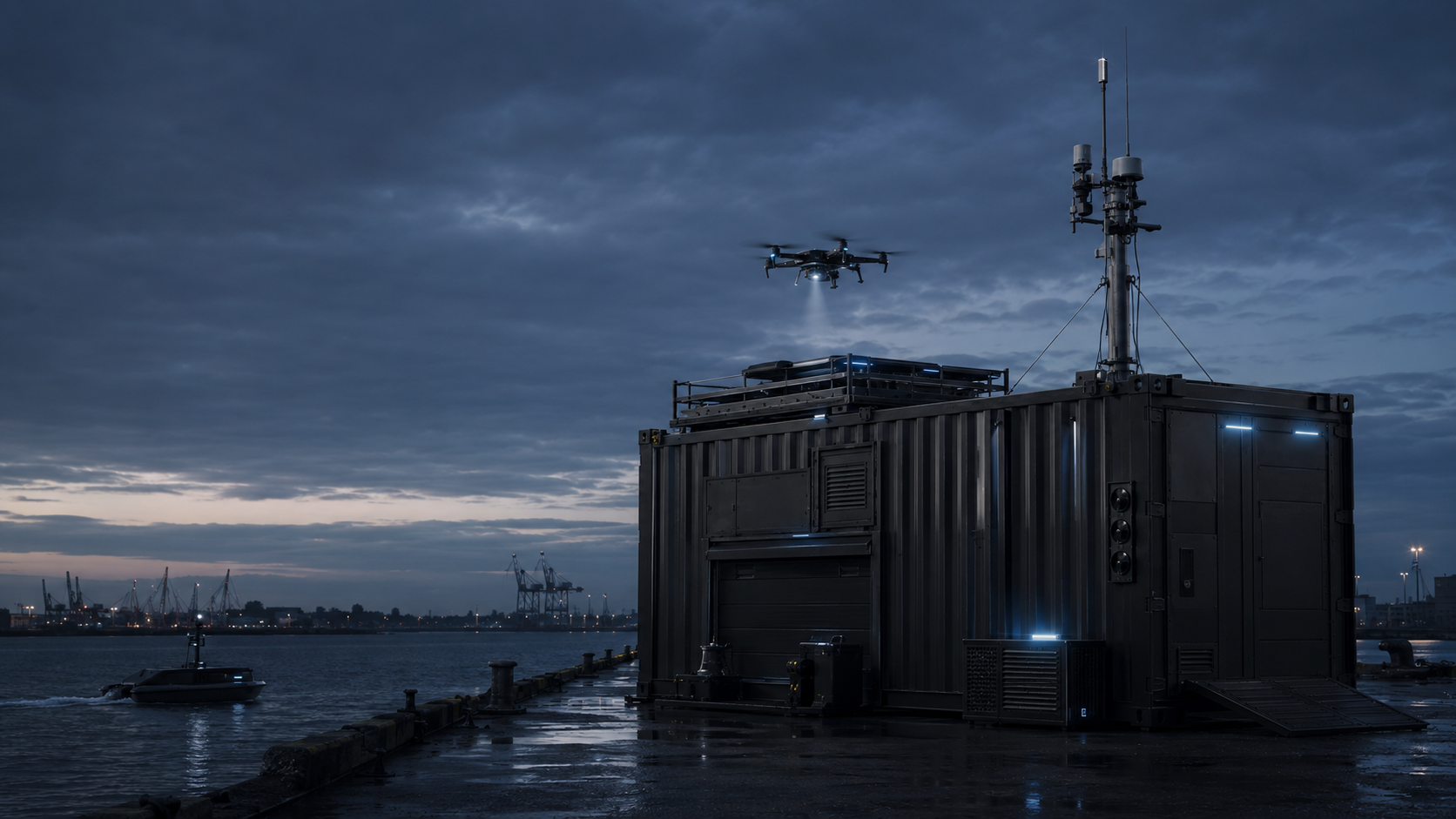 Image 1 of 9
Sentinel OS connects existing security systems, site intelligence, communications, and autonomous assets into one coordinated response workflow.
One command surface. Three autonomous domains. A single fused operational picture at the edge.
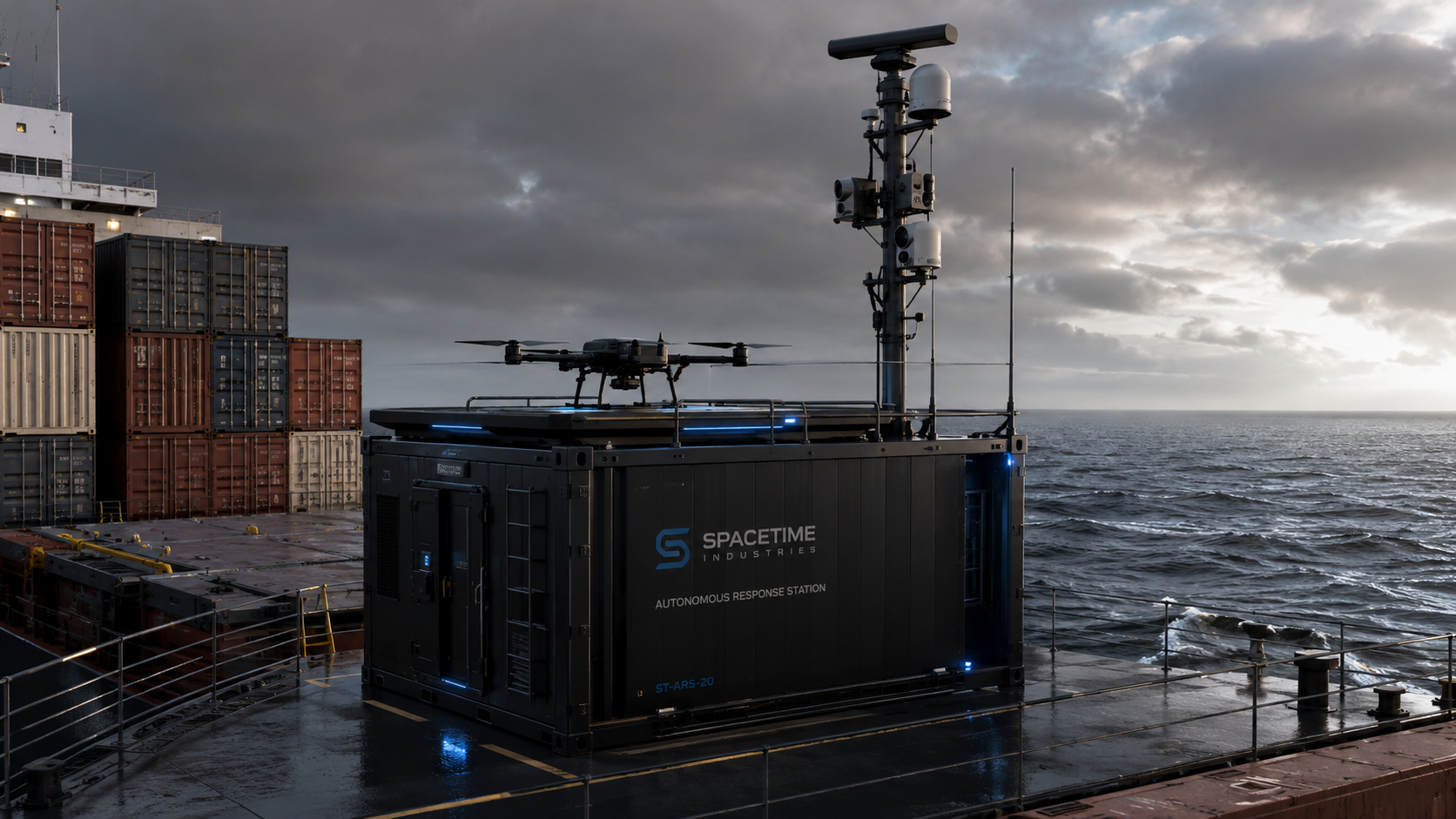
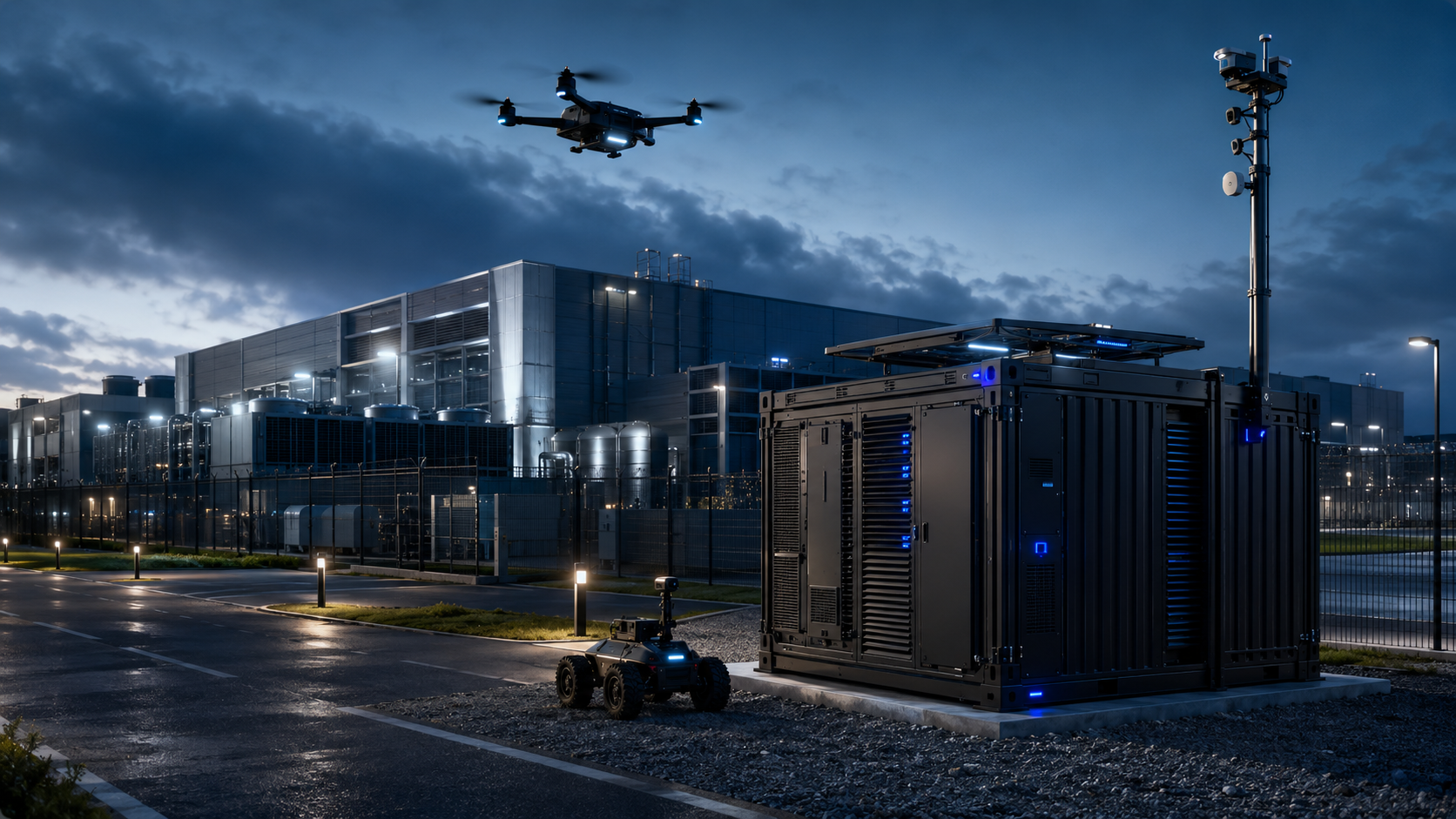
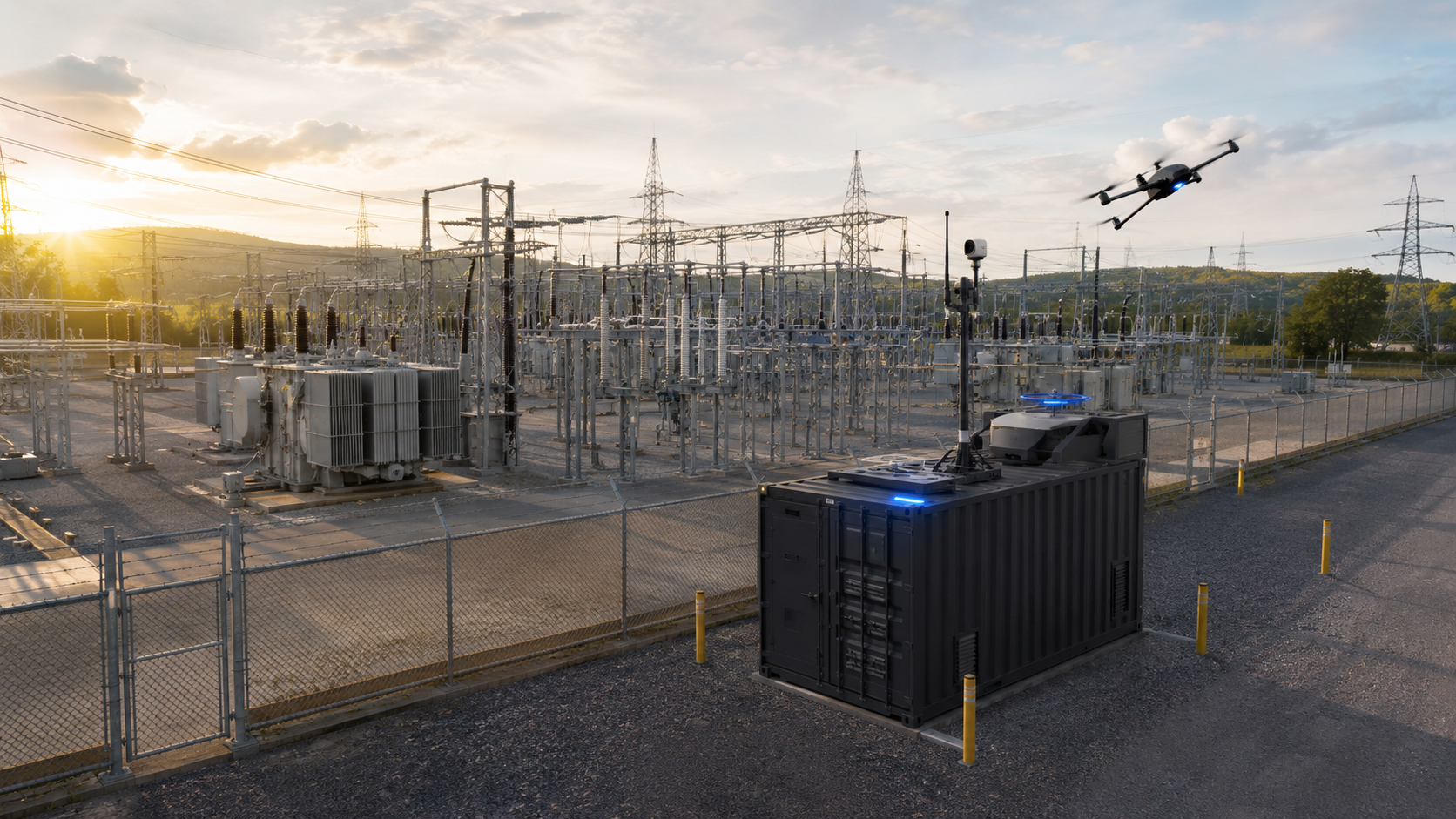
A perimeter breach can trigger rapid aerial verification before a human responder reaches the site. Automated roof-deck launch, recovery, charging, and tasking for multi-rotor platforms.
Fence-line anomalies can be investigated immediately by an approved unmanned ground asset instead of waiting for a patrol vehicle. Quadruped and wheeled UGV orchestration through complex, denied, and hazardous terrain.
Unidentified vessels approaching restricted waters can be detected, tracked, classified, and documented for coordinated response. Hydraulic launch and recovery for surface vessels conducting perimeter and infrastructure patrol.
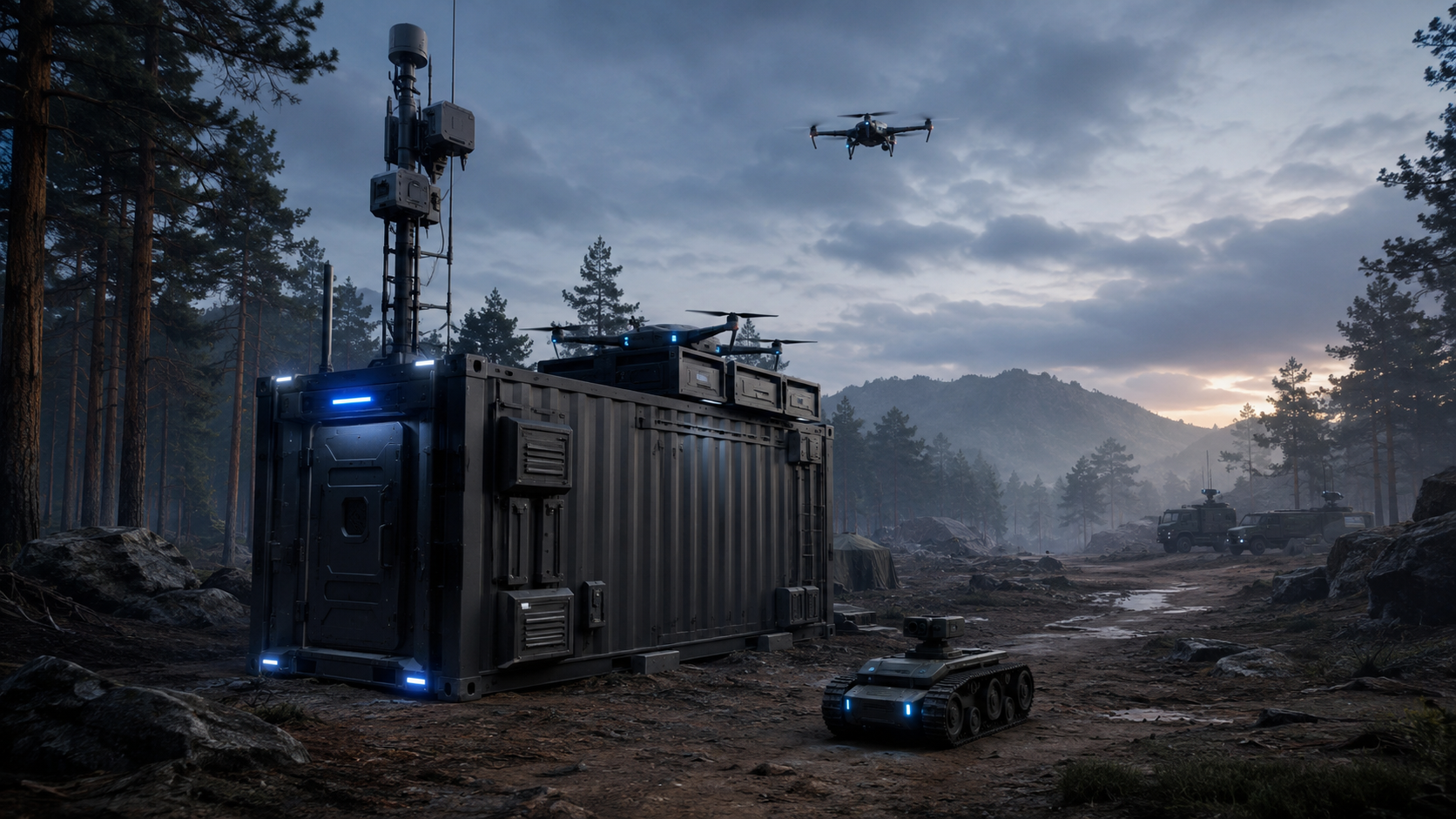
From fixed infrastructure to forward operating locations, COMMAND CORE deploys where conventional cloud architectures fail.
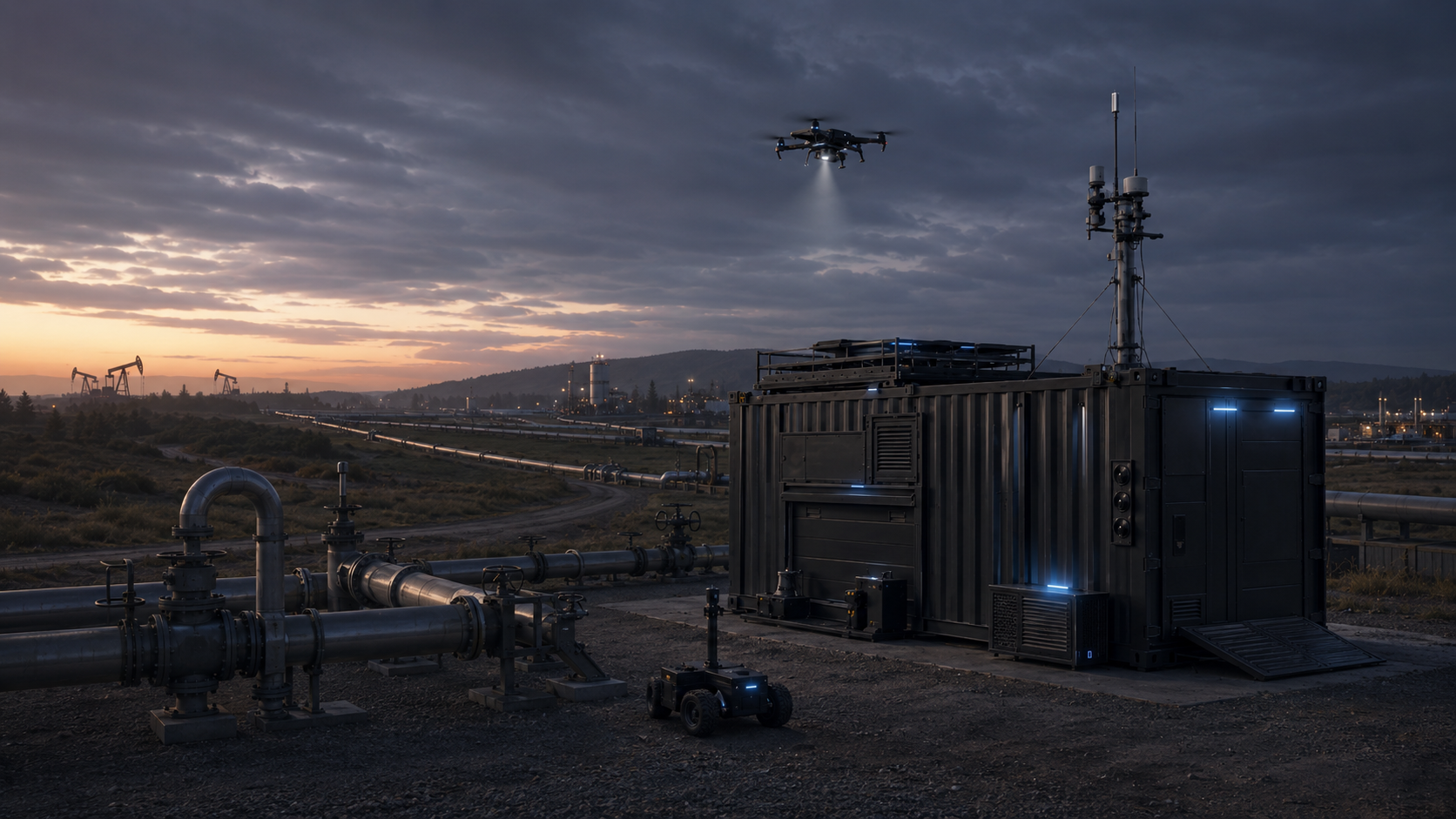
24/7 thermal, visual, and access anomaly detection. Built to support faster verification and coordinated response to copper theft, vandalism, perimeter intrusion, and equipment tampering.
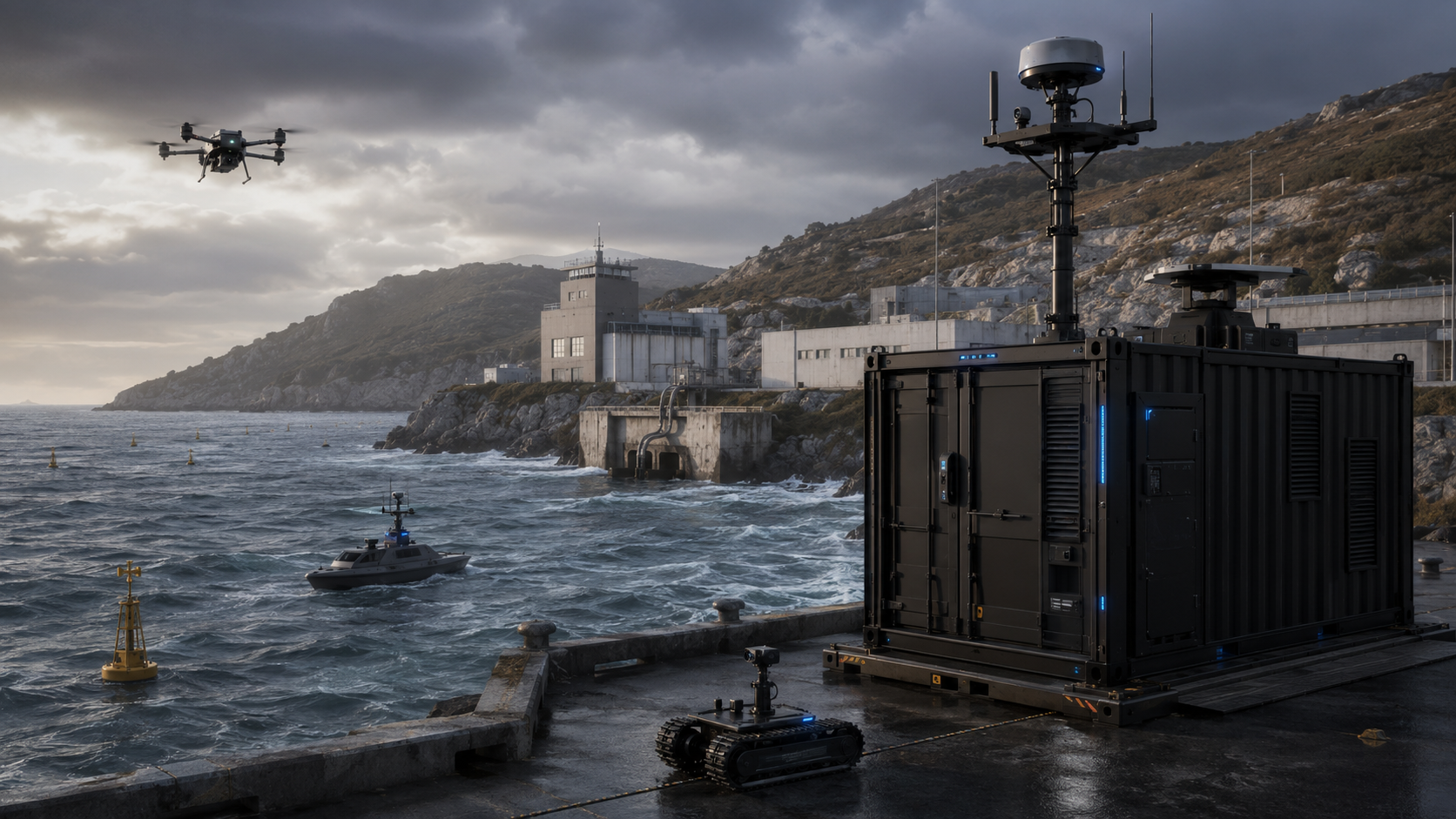
Persistent waterside and landside perimeter intelligence. Built to support vessel tracking, restricted-zone awareness, landside intrusion verification, and coordinated maritime response.
Autonomous monitoring of critical shoreline infrastructure.
Remote inspection without cloud or persistent connectivity. Built to support remote detection and verification of third-party interference, perimeter breaches, equipment tampering, and operational anomalies.
Rapidly deployable multi-domain C2 for austere operations.
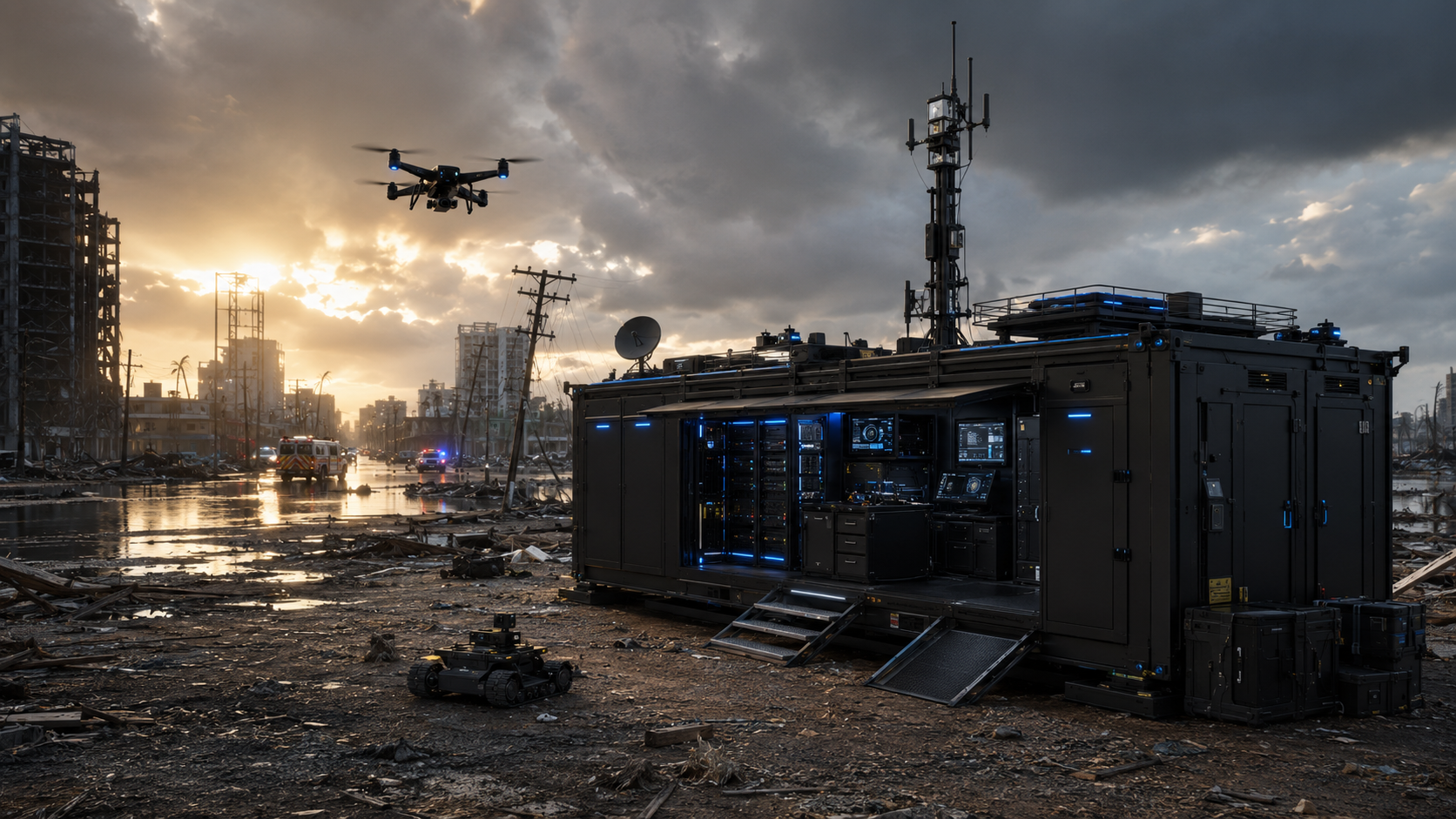
Rapid autonomous support for disaster, rescue, and critical incident operations.
Product renders on this site show illustrative deployment configurations. This is where each part of the system currently stands.
SpaceTime designs, integrates, deploys, operates, monitors, and maintains the approved response system. Customers do not need to build robotic infrastructure or operate autonomous assets themselves.
Sentinel OS interface, incident workflows, alert ingestion, human approval, response coordination, operational reporting, and deployment planning.
Approved cameras, alarms, sensors, communications systems, APIs, and third-party autonomous platforms.
Configured autonomous asset workflows, edge deployments, field demonstrations, and site-specific response procedures.
Additional air, ground, maritime, charging, docking, and infrastructure-specific deployment configurations.
ALL IMAGERY ON THIS SITE DEPICTS REFERENCE SYSTEM CONFIGURATIONS.
Four stages, from first conversation to a system SpaceTime operates on your behalf. Final architecture, pricing, and timing are confirmed after a technical site assessment.
Confirm the site, threat profile, stakeholders, timeline, and operational requirements.
Review existing systems, integrations, communications, site conditions, and preliminary deployment architecture.
Configure an approved use case, operating workflow, integrations, reporting structure, and field demonstration.
SpaceTime operates, monitors, maintains, and supports the approved system under a managed commercial agreement.
SpaceTime provides a fully managed autonomous response system, from integration and deployment through ongoing operations and maintenance.
Cameras and alarms are important detection tools, but they primarily record and report events. Human guards and public responders may not be positioned close enough to investigate every alert immediately. SpaceTime connects detection systems with coordinated autonomous verification and response workflows while maintaining authorized human oversight.
A managed system combining Sentinel OS, sensors, communications, and autonomous assets to protect critical infrastructure.
No. SpaceTime is the owner-operator and manages system operations, readiness, and mission oversight.
Yes. We handle the full integration process for approved cameras, sensors, alarms, APIs, and security systems.
Yes. It can operate as a standalone node or connect through approved APIs and integrations.
SpaceTime handles hardware maintenance, repairs, software updates, monitoring, and ongoing technical support.
Approval rules are configured with the customer. Sensitive missions and escalations can require authorized approval.
Sentinel OS detects, classifies, coordinates approval, deploys an asset, verifies the event, and documents the outcome.
Site access, operational requirements, existing-system information, escalation contacts, and required internal approvals.
Request the technical dossier, system architecture, and field deployment brief.